Plenary Speakers
Confirmed speakers:
Marco Ajmone Marsan (IMDEA Networks Institute, Spain)
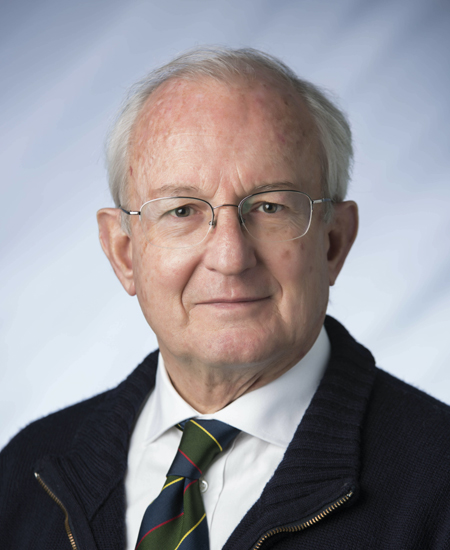
Bio: Marco Ajmone Marsan is one of Europe’s most eminent scholars in computer and communication networks. He is Professor Emeritus at Politecnico di Torino, where he served with distinction in several senior academic leadership roles, and he is now a part-time Research Professor with the IMDEA Networks Institute in Spain. Over a career spanning decades, he has made foundational contributions to the performance evaluation of communication systems, stochastic modeling, and energy-efficient networking.
Professor Ajmone Marsan has authored more than 300 scientific publications and co-authored landmark books that have helped shape the field. His work has had a profound international impact, earning him recognition as an IEEE Fellow and membership in Academia Europaea, among other honors. Widely respected for both his scientific achievements and his leadership within the research community, he continues to influence the evolution of networking research in Europe and beyond.
Keynote title: TBA
Abstract: TBA
Michela Chessa (Université Côte d’Azur, CNRS, GREDEG, France)

Bio: I am currently an associate professor (Maître de conférences) in economics at ELMI – Graduate School of Economics and Management, Université Côte d’Azur and a member of the Groupe de Recherche en Droit, Economie, Gestion (GREDEG, CNRS laboratory, UMR 7321) in Sophia Antipolis. For the current academic year 2025-2026, I am on a part-time délégation at Inria with the Neo team, Sophia Antipolis. My research interests lie in behavioral economics, with a particular focus on game theory as a tool for modeling and analyzing interactive decision making of economic agents. My methodology is mostly theoretical (with insights from mathematical optimization and operations research techniques) and, more recently, experimental. I am also interested in the computational aspects linked to the complexity of studying these interactions. My main domains of applications are (i) voting systems, social choice and cooperation (ii) personal data, privacy issues and the digital economy, (iii) graphs and hypergraphs, and (iv) routinization and creativity.
Keynote title: “Hypergraphs, clustering and games”
Abstract: TBD
Shmuel Zaks (Technion, Israel)
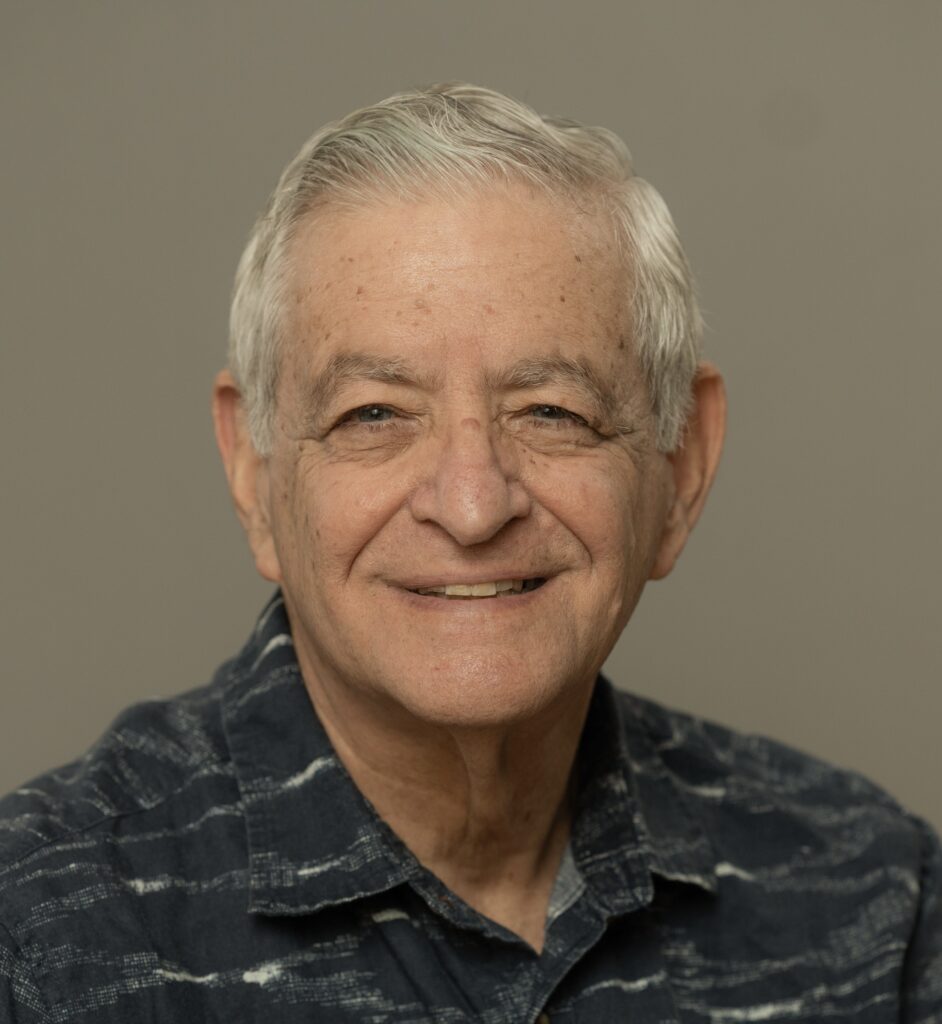
Bio: Shmuel Zaks holds BSc and MSc degrees in Mathematics from the Technion and a PhD degree in Computer Science from the University of Illinois at Urbana-Champaign (1971, 1972, 1979, resp.). In 1979 he joined the Henry and Marilyn Taub Faculty of Computer Science at the Technion, Israel, where he has been a Professsor since 2000, and the incumbent of the Joan Callner-Miller Chair in Computer Science since 2008. He was there until 2017, and since then he is there as a Professor Emeritus.
His research interests span a variety of topics in networking, combinatorics, graph theory, and other areas of Theoretical Computer Science with emphasis on discrete mathematics. His works on Networking include communication complexity in distributed computing, and studies of approximation algorithms and online algorithms in the context of optical networks. He published over 200 journals and conference papers, was on over 40 program committees, was a co-chair of the International Workshop on Distributed Algorithms on Graphs (WDAG), Haifa, Israel, in 1992 and of the International Colloquium on Structural Information and Communication Complexity (SIROCCO), Castiglioncello, Italy, in 2007. He supervised 20 graduate students, and received the Prize for Innovation in Distributed Computing, SIROCCO, in 2017.
His academic activities include visits and collaborations in numerous academic institutions and research centers abroad, including MIT, Institute IMDEA Networks in Madrid, Spain, INRIA Sophia Antipolis in France, and the University of Rome La Sapienza and the University of l’Aquila in Italy.
Keynote title: ” Theoretical studies of real problems in a variety of networks”
Abstract: The talk presents cases in which algorithmic and complexity issues are playing a central role in the study of a problems that arise in a variety of networks; These include distributed systems, optical networks, cellular networks, ATM networks and Quantum networks. In these cases, a problem initiated in a real application is first formulated as an optimization problem, usually with the aid of graph-theoretic terminology. The study of the problem then takes a variety of directions; these include designing of an efficient algorithm, analyzing the problem’s complexity, designing of an approximation algorithm, and designing of an online algorithm.
More info on the talks will be announced soon.